How to Win on Product Hunt
·
We came in #2, so we haven't quite done it yet. But here's what we learned from trying.
Tadata launched on Product Hunt on September 6, 2026, and finished #2 Product of the Day with 343 upvotes and 40 comments.
It would be disingenuous to say that we didn't want first place; we did. 😊 But our bigger goal was to get Tadata in front of more people in our ICP and turn that attention into early adoption. Product Hunt is great for that, but the final ranking also depends on who else happens to launch the same day.

We're sharing what worked for us so other teams can use Product Hunt to get their product noticed and drive early adoption.
A key point: Product Hunt rewards execution as well as the product itself. Great products tend to do well there. Notion, Wispr Flow, Loops, and plenty of others have shown that. But Product Hunt is also an execution challenge. A strong product can get overlooked if the launch is poorly run. You can't control who else launches or how people vote, but you can control how well you prepare and show up on the day.
What the launch delivered
343 upvotes and #2 Product of the Day
We would have preferred to be #1, but being anywhere in the top three gives meaningful visibility.
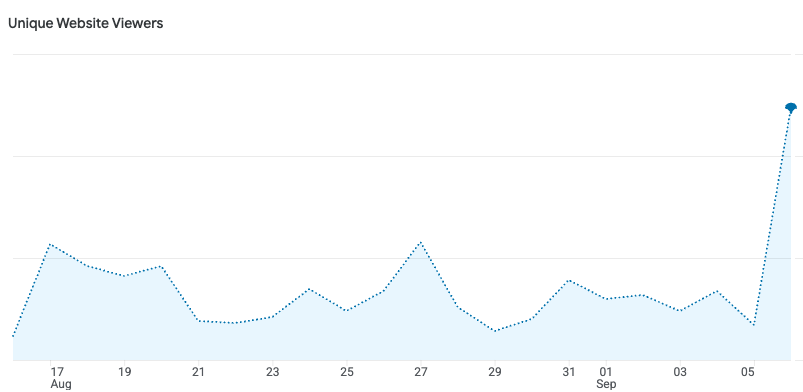
Website traffic increased 2×
Website traffic doubled on launch day and remained high the next day.
Daily signups increased
We saw a spike in daily sign-ups. This was the result we cared about most. Product Hunt visitors arrive actively looking for new products to try, which makes them unusually high-intent. How significant the boost is depends on your sign-up baseline.
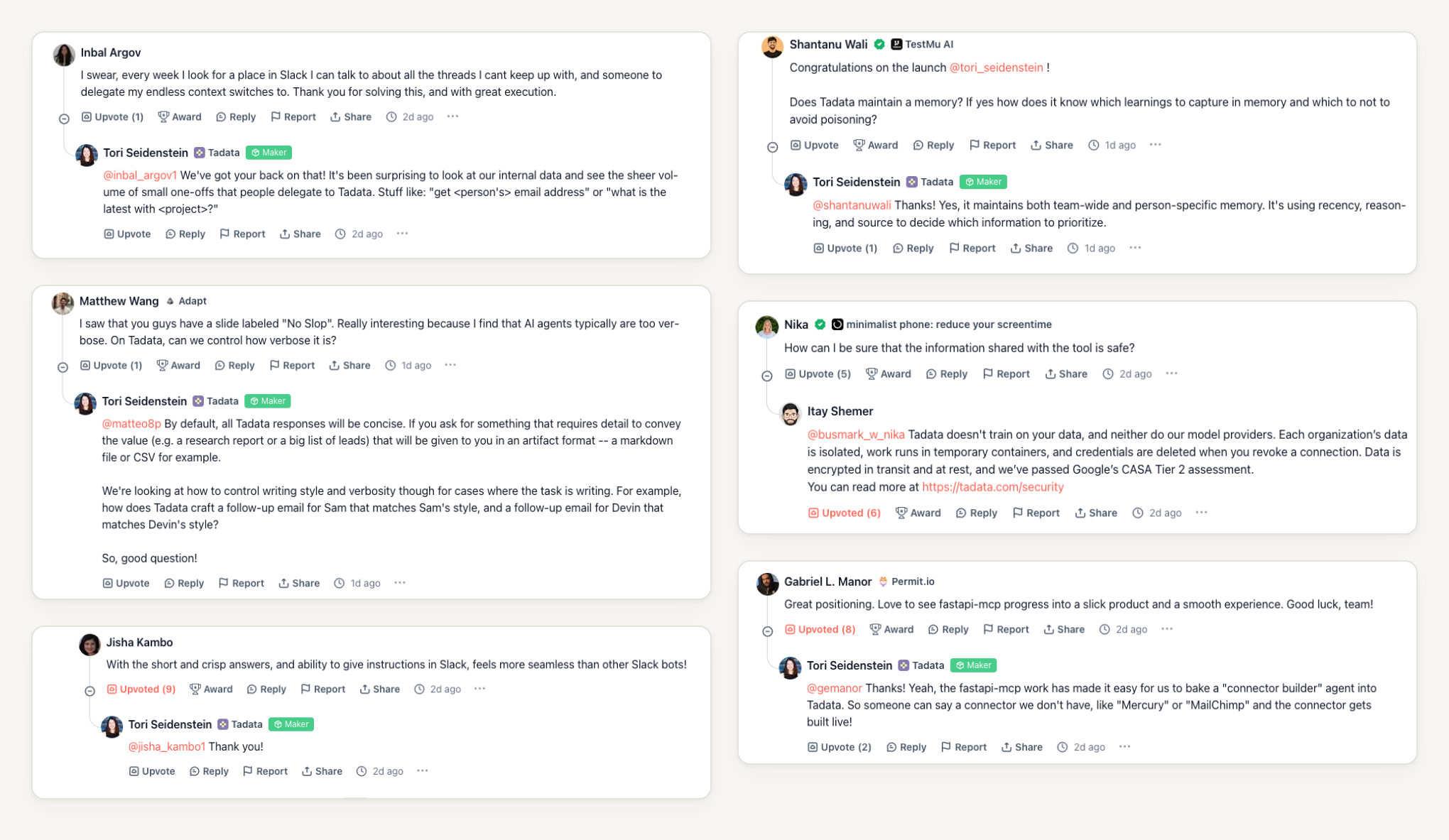
40 substantive comments
We were really impressed with the thoughtful questions and comments. The people who like to hang out on Product Hunt seemed well-versed in our category.
Before we launched, we were very curious about what questions people would ask. We found they lined up well with what people ask us during live onboarding calls.
How we prepared for our Product Hunt launch
We turned one meeting into a launch plan
One month before our launch date, we held a team meeting to decide on our narrative and our game plan. Then we gave the recording of that meeting to Tadata, which created 49 Linear issues, each assigned to the right teammate based on its knowledge of each person's scope.
The plan included everything from load testing our product for increased sign-ups, to writing the "Maker Post" for our launch page.

We built the launch page around one clear story
We created a short launch video and a sequence of static visuals designed to explain Tadata quickly. The video was a funny 20 second hook designed to capture attention and get a laugh, followed by a 1 minute demo.
The launch was a good forcing function to create assets we'll keep using.
We prioritized customer proof
The strongest proof of a product comes from actual users, so we really wanted people viewing the launch page to hear from our customers directly.
We used Tadata to find active users with compelling stories by pulling together product usage from Grafana and customer context from our CRM, Attio. Then we reached out, and told them about the upcoming launch, and asked if they would be willing to leave a review.
This worked well in principle, but we made an important operational mistake: we asked users to post their review on the launch date itself. More on that below.
We mapped the people in our orbit
Each person on our team built a launch-support list that included customers, friends, former colleagues, and WhatsApp and Slack communities.
We did not treat every contact the same. Customers could speak credibly about the product. Friends and former colleagues could help us extend the launch's reach. Relevant communities created hype within themselves.
Building Product Hunt advocates
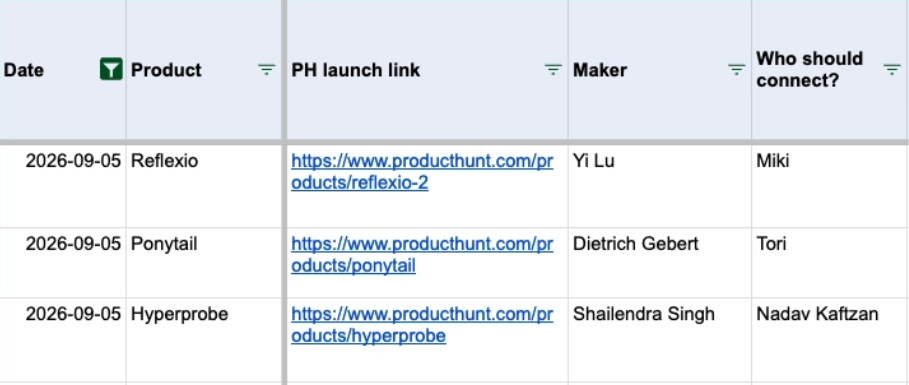
Not all upvotes on Product Hunt are worth the same number of points, and we wanted to specifically befriend Product Hunters who would be excited to check out Tadata's launch.
We set up Tadata to help us do this as a team. Every morning at 9:00, Tadata sent us a briefing on a few of that day's launches: who was launching, what they built and its relevance to us, and who on our team was responsible. That person reviewed the launch, tried the product, and connected with the maker.
What we did on launch day
Product Hunt launch day is a hectic 24 hours. Make sure you have snacks on hand to keep your energy up!
We posted on our socials in the morning and then sent messages to our customers, friends, and WhatsApp and Slack communities, asking them to support our launch.
Simultaneously, we responded to questions on the Product Hunt launch page, and addressed any issues new users had.
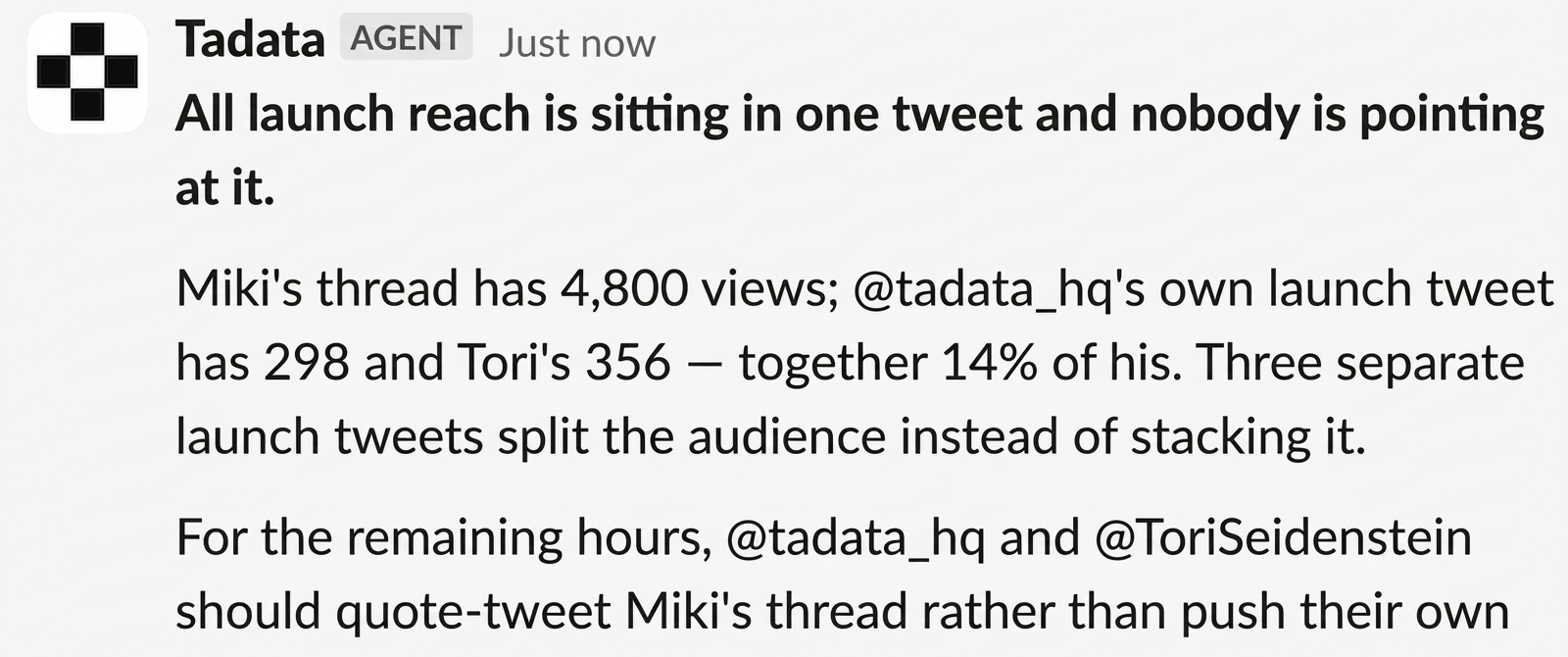
One surprisingly helpful thing Tadata did was flag that one of our posts was outperforming all the others. That let us point more people toward the strongest post and increase its reach further.
What worked, what we missed, and what we learned
Product Hunt was an effective platform for us to create awareness about Tadata.
- Operational excellence is crucial. Product Hunt may look like a one-day competition, but our launch was the culmination of a month of coordinated work. A good launch is an operations project as much as a marketing campaign.
- Get your users' reviews published before launch day. This was our biggest oversight. Product Hunt only publishes a review if the account profile is complete (photo, bio, etc.). Our users tried to post their reviews on the day of our launch, and since many had just created new Product Hunt accounts, their reviews didn't get published. Ask for reviews in advance so you can ensure they successfully got published.
- Explain Product Hunt to people who are new to it. Some believed they had upvoted the launch while signed out because the visible counter appeared to increase. They did not realize that they needed to create an account and log in for the vote to count. Others did not understand that Product of the Day is decided within a single launch-day window, so supporting the launch that day was much more valuable than returning later.
- Ignore the paid vote offers. The day we launched, many people contacted us pitching paid votes. We didn't take them up, but it can be overwhelming.
- The attention continues. We continued to get nearly the same number of signups and the same amount of website views the day after the launch.
Should you launch on Product Hunt?
Yes. Product Hunt gave us new users and increased awareness.
Preparing for it takes a month. Tadata became the operating layer for our launch: managing the tasks, coordinating how our team built relationships on Product Hunt, identifying user stories to highlight, and monitoring our social posts.
If you're planning a launch, Tadata can do the same for your team.
Frequently asked questions
How many upvotes do you need to reach the top 3 on Product Hunt?
For us, 343 was enough for #2 Product of the Day. It varies a lot day-by-day. And upvotes are not the whole picture; sign-ups and increased awareness are very valuable too!
How long before your Product Hunt launch should you start preparing?
We started preparing for our launch one month out. That month went into creating our video and static assets, preparing the product for a surge of sign-ups, supporting other makers' launches daily, and warming our own audience.
What day should I launch on Product Hunt?
We decided to launch on a Sunday, which are typically less busy than weekdays. Sunday is also a regular workday in Israel, where part of our team and user base is located, so we thought that would give us an advantage.
The Sunday we launched turned out to be busy, and we finished second. In the end, the best thing you can do is just pick a date when you'll be prepared!